
The 2-Week Vietnam Itinerary Without the Stress
Vietnam is a country that rewards the patient traveller. Its geography - a long, slender "S" stretching over 1,600 kilometres presents a unique challenge: how do you see the mist-covered mountains of the North, the imperial heritage of the Centre, and the neon energy of the South without spending your entire vacation in the back of a taxi?
The secret here is seeing the right things at a pace that allows you to actually breathe. This 2-week Vietnam travel itinerary is designed to bypass the "backpacker burnout" and offer a refined, culturally immersive journey.
Your Ideal 2 Weeks in Vietnam That Actually Flows
For the best balance of culture, nature, and relaxation, follow this north-to-south route using short domestic flights to maximize time exploring:
- Days 1–2: Hanoi (Arrival & Old Quarter)
- Days 3–4: Ninh Binh (Land Ha Long Bay)
- Days 5–7: Ha Giang Loop (Adventure) OR Lan Ha Bay (Cruise)
- Days 8–9: Hue & Lang Co (Imperial History & Coastal Reset)
- Days 10–12: Hoi An (Atmosphere & Ancient Town)
- Days 13–14: Ho Chi Minh City (History & Departure)
Why This Itinerary Works (And Won’t Exhaust You)
Most travellers don’t feel tired because they see too much. They feel tired because their itinerary doesn’t match how energy actually works. This is where the travel fatigue curve becomes useful:
- Days 1–2: You’re curious, but low on energy (jet lag)
- Days 3–6: Energy peaks, ideal for big experiences
- Days 7–10: Fatigue sets in, where many trips feel rushed
- Days 11–14: You slow down physically, but appreciate more
This 2-week Vietnam travel itinerary follows that curve:
- Hanoi is intentionally light to ease you in
- Ninh Binh gently shifts the pace
- Ha Giang or Ha Long is timed for peak energy
- Central Vietnam is designed for recovery
- Ho Chi Minh City adds a final, controlled burst of energy
Before You Start: Key Travel Decisions (Don’t Skip This)
1. North to South or South to North?
Go north to south for your first trip. Starting in Hanoi eases you into Vietnam’s culture, then gradually builds toward the energy of Ho Chi Minh City.
A 2-week Vietnam itinerary starting in Ho Chi Minh City works if you prefer modern cities first, want beaches earlier, and most importantly, are visiting during the northern winter
2. Flights vs Trains vs Buses?
- Flights: Best for long distances
- Trains: Scenic but slow
- Buses: Budget option for short routes like Hanoi to Ninh Binh
Rule of thumb: If it takes more than 6 hours, it’s best to fly.
3. Is 2 Weeks Enough for Vietnam?
Yes, if you keep your route focused. You won’t see everything, but you’ll experience enough to truly understand the country without feeling rushed.
Your 14-Day Vietnam Itinerary Day by Day
Days 1-2: Hanoi - First Impressions of Vietnam
Welcome to the "Paris of the East." Your journey begins in the Old Quarter, a labyrinth of 36 streets where life spills onto the sidewalk in a beautiful, chaotic dance.
The Vibe: Energetic, aromatic, and deeply historic.
Must-Do: Start with a walk around Hoan Kiem Lake and visit Ngoc Son Temple. On weekends, the surrounding roads become a pedestrian-only zone, transforming into a massive community festival. Don't miss the Water Puppet Theater right by the lake—a tradition dating back to the 11th century.
Deep Dive: Visit the Temple of Literature (Vietnam’s first university) and the Ho Chi Minh Mausoleum. For a change of pace, head to West Lake to see the serene Tran Quoc Pagoda, the oldest in the city.
Instagram Moment: Visit the famous Train Street, where locomotives pass mere inches from cafe tables.
Foodie Fix: Seek out Pho Ly Quoc Su or Pho Thin, and definitely try Bun Cha (grilled pork noodles). For a mid-afternoon pick-me-up, try Egg Coffee at Ca Phe Giang or a trendy Salt Coffee.
Pro Tip: End Day 2 with a professional foot massage. It’s the perfect way to recover from jet lag and prepare your legs for trekking in Ninh Binh or the mountains of Ha Giang.
Days 3-4: Ninh Binh - Nature Without the Crowds
Just two hours south of Hanoi, Ninh Binh feels like a natural exhale: quieter, more spacious, and moving at a slower, more unhurried tempo than the capital.
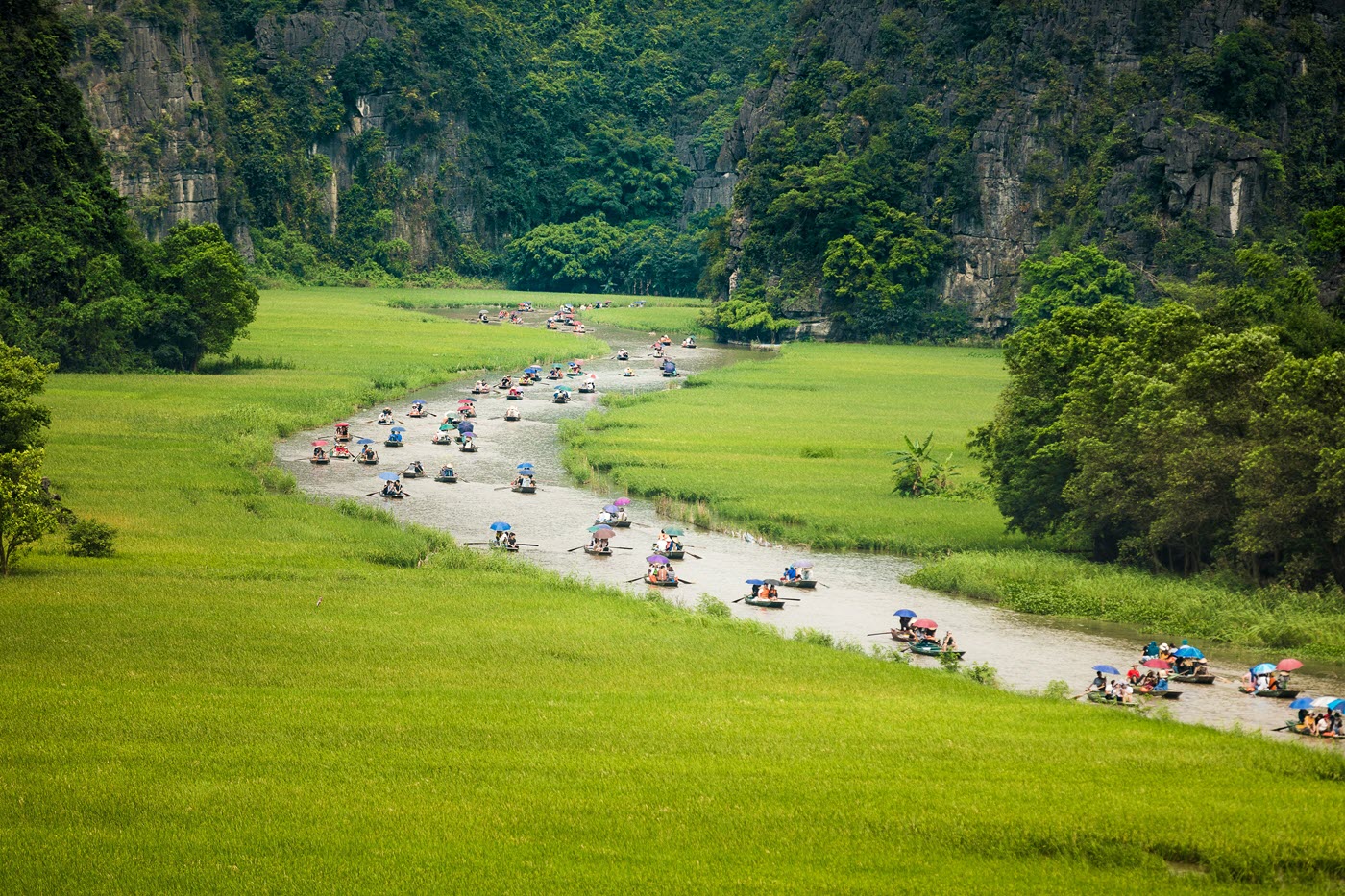
The Activity: Take a wooden boat rowed by locals through Trang An or Tam Coc. You’ll glide through limestone caves and past ancient temples.
The Secret: Most tour groups arrive at noon. Go at 4:30 PM. The heat dissipates, the crowds vanish, and the "Great Wall of Vietnam" (Hang Mua) is lit by the setting sun as you climb the 500 steps for a panoramic view.
The Food: You must try “Com chay” (burnt rice topped with pork floss) and “De nui” (Mountain Goat). Look for restaurants with the sign "Dac san de nui" and if the place is full of local men and crates of Bia Hanoi, you’ve found the authentic spot.
Days 5 - 7: Ha Giang Loop (or Ha Long Bay Alternative)
Here, you must choose your own adventure based on your energy levels and travel style.
Option A: 2-week Vietnam itinerary with Ha Giang Loop
For travellers seeking something more raw and less curated, the Ha Giang Loop offers one of Vietnam’s most unforgettable experiences. This is not just a destination. It’s a journey through dramatic mountain passes, remote valleys, and ethnic minority villages that feel far removed from the usual travel path.
How long to go: A 3-day loop is the minimum—anything shorter feels rushed and misses the region’s natural rhythm.
What to expect: Long days on winding mountain roads, but that’s part of the experience.
How to do it:
- No riding experience needed
- The “easy rider” option lets a local driver handle everything
Option B: Lan Ha Bay (A Romantic 2-week Vietnam travel itinerary for couples and families)
If the rugged terrain of the far north feels too intense, swapping mountains for the emerald waters of the Gulf of Tonkin is a natural way to keep the journey relaxed and family-friendly. While Ha Long Bay is the better-known name, a cruise through Lan Ha Bay offers a quieter, more exclusive experience with the same limestone karsts, but far fewer boats.
The Experience: Book an overnight cruise instead of a rushed day trip from Hanoi. Spending 24 hours on the water reveals the bay at its most atmospheric.
Why it works for couples: A highlight of any 2-week Vietnam travel itinerary for couples, with candlelit dinners on deck and quiet mornings drifting past floating villages.
Why it works for families: Easier and less demanding than Ha Giang, activities like kayaking, swimming, and cave visits keep it engaging without long, tiring transfers.
Pro tip: Choose cruises departing from Got Pier in Hai Phong for a shorter transfer from Hanoi and more time on the water.
Days 8-12: Central Vietnam: Balance & Recovery
By the second week of your journey, the "travel fatigue curve" typically begins to dip. After the sensory climb of Hanoi and the physical immersion of the North, Central Vietnam offers a much-needed emotional and physical plateau. This region is the soul of any 2-week Vietnam itinerary with beaches, a place where the pace slows, the air softens, and the focus shifts from "doing" to "being."
Local tip: To truly enjoy the coastal magic, timing is everything. The best time to visit Central Vietnam is between February and April.
Da Nang: Gateway & Beaches
Da Nang serves as the modern, airy gateway to this restorative stretch. While many travellers use it only for the airport, it is the perfect "practical pause" in your Central Vietnam travel.
The Vibe: Organized, breezy, and effortlessly accessible.
The Experiences: If you arrive in the afternoon, head straight to My Khe Beach. Unlike the bustling streets of Hanoi, the wide shorelines here offer a sense of space. When looking for the best things to do in Danang, the secret is to keep your list short so you don't overwhelm the "recovery" phase of your trip. A sunset walk across the fire-breathing Dragon Bridge, a quick exploration of the Marble Mountains, or simply enjoying a coconut coffee overlooking the Han River are the highlights.
Hue: Culture & History
A short, scenic drive north brings you to Hue, often considered the cultural and spiritual heart of Vietnam. If Da Nang represents modern ease, Hue feels like stepping into a more poetic, layered past.
The vibe: Reflective, elegant, and unhurried.
The best things to do in Hue: Explore Hue Imperial City, a vast complex of temples, gates, and royal courtyards that brings Vietnam’s imperial history into focus. In the afternoon, you can take a dragon boat along the Perfume River at sunset.
Lang Co: The Hidden Coastal Reset
Tucked quietly between Hue and Da Nang, Lang Co is where the journey intentionally slows down.
After days of movement between cities and mountains, this stretch of coastline offers something different: space, stillness, and a sense of calm that feels almost restorative.
This is where our itinerary deliberately enters "low gear." Lang Co is a strategic midpoint designed to prevent burnout. It is an uncrowded sanctuary where the mountains meet the sea, offering a rhythm that is dictated by the tides rather than a tour schedule.
At the centre of this experience is Banyan Tree Lang Co, known for its all-pool villas that combine privacy, space, and refined design. Set within Laguna Lang Co, the resort offers one of the most distinctive Vietnam beach resorts, with villas with private pool overlooking the sea, lagoon, or mountains.
Beyond the stay, the experience is intentionally unhurried:
- Rejuvenating treatments at the award-winning Banyan Tree Spa
- Dining that blends Vietnamese flavors with international cuisine
- Access to Laguna Lang Co’s facilities, including an 18-hole golf course designed by Nick Faldo
Hoi An: Atmosphere & Evenings
Hoi An is often the place where travellers leave their hearts. As you conclude the Central Vietnam chapter of your Vietnam travel itinerary 2 weeks, this ancient port town serves as an emotional and memorable anchor.
The vibe: Nostalgic, romantic, and effortlessly slow.
What to do: Wander the Old Town without a plan, walk along the Thu Bon River at sunset, visit the Japanese Covered Bridge, pause at a riverside café, and simply watch the evening unfold
What to eat: Cao Lau - chewy noodles unique to Hoi An, White Rose Dumplings - delicate and lightly seasoned, Com Ga - fragrant chicken rice, and Banh Mi - best at Banh Mi Madam Khanh.
Days 13–14: Ho Chi Minh City - A Dynamic Finale
Your journey concludes in the southern metropolis, a high-octane contrast to the quiet of Central Vietnam. If you are following a 2-week Vietnam itinerary starting in Ho Chi Minh City (Sai gon) in reverse, this would be your starting line, but as a finale, it offers a final burst of energy.
The Vibe: High-octane, modern, and poignant.
The Coffee Hack: Visit a "Coffee Apartment" at 42 Nguyen Hue. Don't just stay on the ground floor; take the stairs or elevator to the 4th or 5th floor for the quietest balconies and the best skyline views of the city's modern architecture.
Must-Eat: Com Tam (Broken Rice). It is the quintessential soul food of the South with grilled pork, a fried egg, and broken rice grains.
The Conclusion: Spend your final hours visiting the War Remnants Museum or the Notre Dame Cathedral before heading to a rooftop bar for one last sunset. Two days here is enough for a powerful first impression without overloading the final leg of your trip.
Choose Your Own Adventure: Optional Extensions & Swaps
No two travellers are the same. If the standard route doesn't perfectly fit your vibe, use these "Local Swaps" to customize your 2-week Vietnam travel itinerary without breaking the logistics.
1. The Family Sanctuary: Swap Ha Giang for Sapa
The logic: The 3-day Ha Giang motorbike loop can be grueling for young children. Sapa offers the same dramatic rice terraces but with the comfort of the Fansipan Cable Car and luxury mountain retreats.
The vibe: Gentle treks through Muong Hoa Valley, cultural encounters with the Red Dao people, and cooler mountain air.
Local tip: Take the Muong Hoa Mountain Train for sweeping views without hiking, especially great for families.
2. The Hardcore Trekker: Swap Ninh Binh for Pu Luong
The logic: Loved Ninh Binh but want something quieter and more untouched? Head to Pu Luong Nature Reserve, about 4 hours from Hanoi.
The vibe: Lush valleys, bamboo water wheels, and a slower, more authentic rural rhythm.
Local tip: Stay in a traditional stilt house in Kho Muong village for a deeper cultural experience.
3. The Ultimate Beach Seeker: Swap Saigon for Phu Quoc
The logic: If you’re craving more beach and less city, replace Ho Chi Minh City with Phu Quoc, a perfect fit for 2 weeks in Vietnam, including Phu Quoc.
The vibe: White sand, turquoise water, and slow sunsets.
Local tip: Skip busy Long Beach. Visit Sao Beach early or take a boat to the An Thoi islands for quieter snorkeling spots.
4. The Heritage & Golf Enthusiast: Extend Lang Co, Reduce time at Hoi An/ Ho Chi Minh City
The logic: Instead of adding more destinations, focus on depth. This swap suits travellers who prefer slow travel, refined experiences, and fewer transitions.
The vibe: Quiet luxury, coastal serenity, and easy access to Hue’s cultural heritage, ideal for Vietnam luxury holidays.
Local tip: Book a spa session at Banyan Tree Spa Lang Co for a more tranquil, immersive wellness experience.
5. Practical Travel Tips for Vietnam
A few simple decisions can make your 2-week Vietnam travel itinerary feel smooth instead of stressful. Vietnam is easy to navigate once you understand the basics.
Visa basics: Apply for an e-visa online in advance; approval usually takes a few days
SIM cards: Buy at the airport for cheap, reliable data across the country
Cash vs card:
- Cash is essential for local spots and smaller towns
- Cards are widely accepted in hotels and upscale venues
- Carry small notes for daily use
Safety:
- Generally very safe for travellers
- Watch traffic when crossing streets
- Be mindful of minor scams in tourist areas
Weather differences:
- North: cooler, seasonal (can be foggy)
- Central: beach-friendly, occasional rain
- South: warm year-round, short tropical showers
Packing tip: Pack for multiple climates as you’ll experience different weather across regions.