
About the destination
The Wisdom of the Wilds
Call it intuition, or an invitation. Nature's road less travelled has a magnetic pull, and it leads to Tanzania’s wild landscapes.
Between mountain and tree, a healer bridges ancient wisdom with the needs of his community amid the wild landscapes of the Tanzanian highlands.
In the southern highlands of Iringa, where the Ruaha plains stretch to horizon and the wind moves like liquid gold, the work of a healer carries both weight and discretion. Abdi Sivayavano, a man in his eighties yet with the bearing and appearance of someone decades younger, sits at the intersection of tradition and state.
Known locally as the Lion of the People, he is both the chairperson of the Iringa regional council of traditional healers and deputy chairperson of Tanzania’s national forum, a body that liaises with the Ministry of Health to integrate ancestral practice into public medicine.
His mornings begin quietly. He walks the hill’s edge, barefoot on red soil, listening to the rustle of acacia leaves. Though the room where he works is filled with objects whose purpose lies outside Western logic, calabashes, bones, carved wood - there is a rhythm to their arrangement that speaks of care and cultural continuity. Visitors are not invited to judge; the objects exist as instruments, symbols, and talismans, their meaning embedded in practice rather than explanation.
Abdi’s knowledge comes from generations of healers before him, each lineage bearing the combined weight of observation, ritual, and inherited understanding of plants. He describes the philosophy of Unani medicine, a system of healing introduced through Arab, Persian, and Indian influence centuries ago, which merges harmoniously with HeHe herbal practices.
Before touching the herb, I bless my hand. Before speaking, I bless my mouth.
In his hands, the two streams converge: the study of temperaments and humors from Unani traditions alongside the community’s ancestral understanding of trees, roots, and spirits. “Before touching the herb, I bless my hand,” he says. “Before speaking, I bless my mouth.” Words are spoken softly, but with authority. Power, in Abdi’s view, is inseparable from respect, respect for the patient, the plant, and the land.
Not every healer carries such power. Among the Hehe, only those who place God at the center of their practice, who acknowledge their limits and honor the lineage, may truly heal. In his work, this manifests in meticulous care. Each leaf, each bark, is selected with intent. Dosages are measured by knowledge accrued over decades, sometimes centuries. The healer’s aim is not spectacle but alignment, a recalibration of body, spirit, and environment.
Even within modern frameworks, Abdi remains an archivist of practice. In the national forum, he oversees the registration and certification of traditional healers, ensuring that only those trained and recognized may practice publicly. In hospitals, certified healers work alongside doctors, blending herbal remedies with clinical care when appropriate. Yet for all his institutional presence, he still climbs the rugged mountain patch, a short drive away from his home, a place the community regards as sacred.
It is said that spirits inhabit the summit, and only the respectful, prepared, and knowledgeable may approach safely. “The mountain listens,” Abdi says. “You do not ask for anything. You arrive, and it knows.”
Here, amidst mist and stone, he gathers leaves and roots, sometimes alone, sometimes with apprentices. The mountain functions as both classroom and observatory, a place where medicine, myth, and landscape converge. Within the community, the mountain patch is not merely symbolic. Elders speak of it as a center of guidance, where healers receive the counsel of ancestors. Certain clay vessels, used in rituals since 1977, are kept in its shadow. These pots bear raised nodules aligned with the body’s points of vulnerability. They are instruments of focus: patients’ ailments are read through observation, touch, and ritualized practice.
Life is not for keeping, it is for learning,
He says. “The tree does not promise freedom from death, only a fuller understanding of the body’s seasons.” This principle, embodied in his own presence, lends weight to his work. At over eighty years old, he moves with the agility of a man half his age. His skin is taut, his eyes alert. Apprentices often pause mid-task to note the contradiction, the healer’s years, invisible on his body.
It is not magic, he insists, but respect for the practices, the plants, and the daily disciplines that sustain him. Abdi’s lineage continues. His father and grandfather passed knowledge orally and practically; his son now watches and learns, trained in both modern education and ancestral practice.
Healing, he explains, is inherited like breath: it moves silently from one generation to the next, shaped by observation, respect, and continuity.
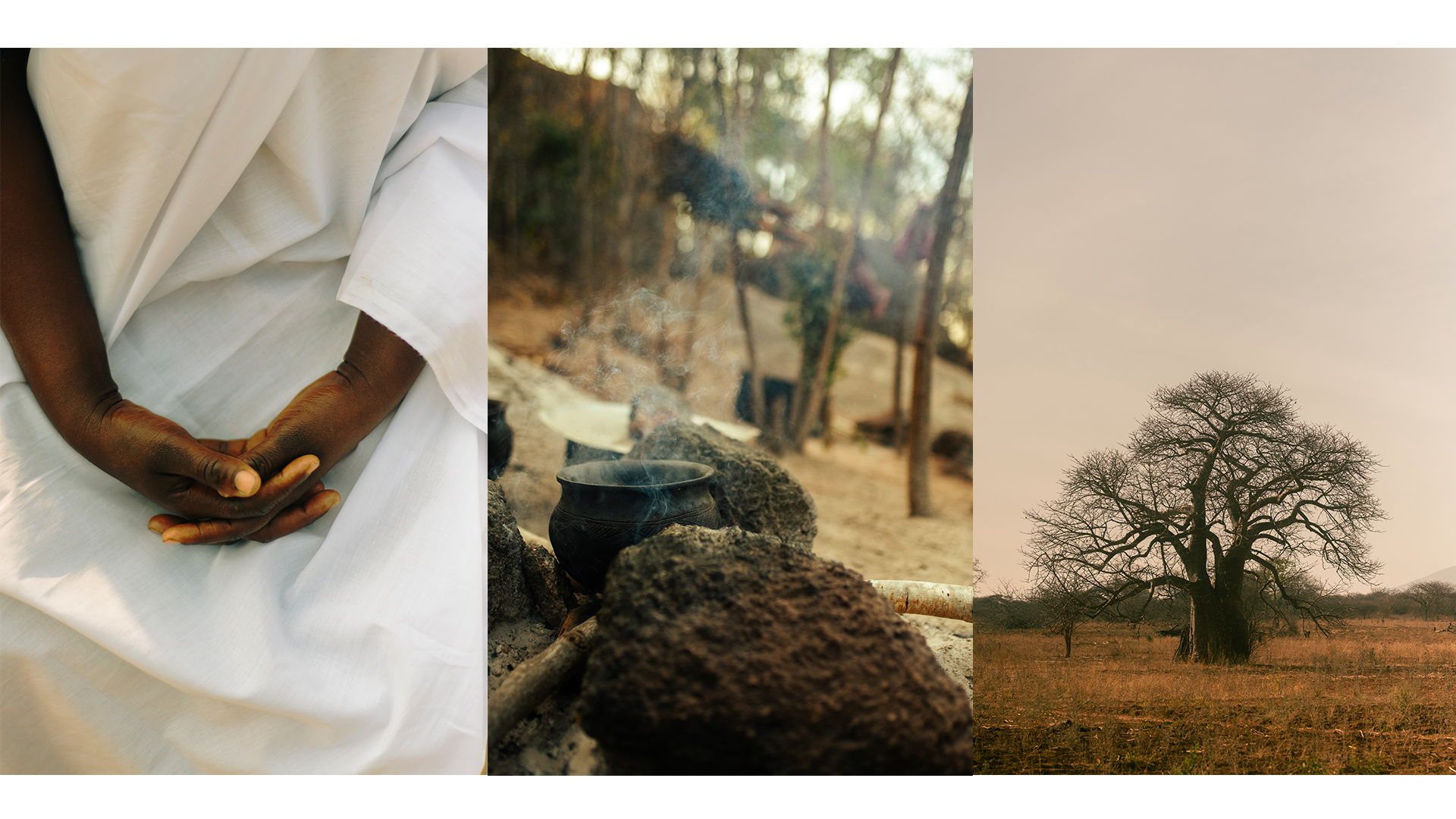
Evening falls over the Ruaha plains. The mountain darkens to indigo, and the wind carries the scent of earth and acacia. Somewhere in a hidden grove, Onani stands, a reminder of mortality, longevity, and balance. Abdi sits quietly, hands folded, contemplating the same landscape he has walked for decades.
The land, the tree, the mountain, each element is a teacher. Each patient a test of skill, humility, and patience. Here, the story of Ruaha is neither myth nor legend alone. It is a story of a healer who bridges centuries, cultures, and practices, embodying the balance of tradition and state, of spirit and science. His life, his methods, and his presence articulate a subtle truth: that healing is less about the extraordinary than the enduring; the sustained alignment of body, knowledge, and environment.
“The tree never dries,” he whispers. “Even when the rains stop.” And in that small assertion, the ethos of a community, a lineage, and a healer is preserved.
Discover Hehe culture, Tanzanian landscapes, and iconic wildlife at Ubuyu, a Banyan Tree Escape.
Call it intuition, or an invitation. Nature's road less travelled has a magnetic pull, and it leads to Tanzania’s wild landscapes.
Discover Ubuyu, a Banyan Tree Escape, a safari experience hidden in Tanzania’s best kept secret: Ruaha National Park.
At Maji Spa, experience wellbeing treatments rooted in local medicinal plants, powerful botanicals, and ancient techniques.
.jpg "bte-ubuyu-spa.jpg")